
Adversarial Thinking at Home
Why This Mindset Matters
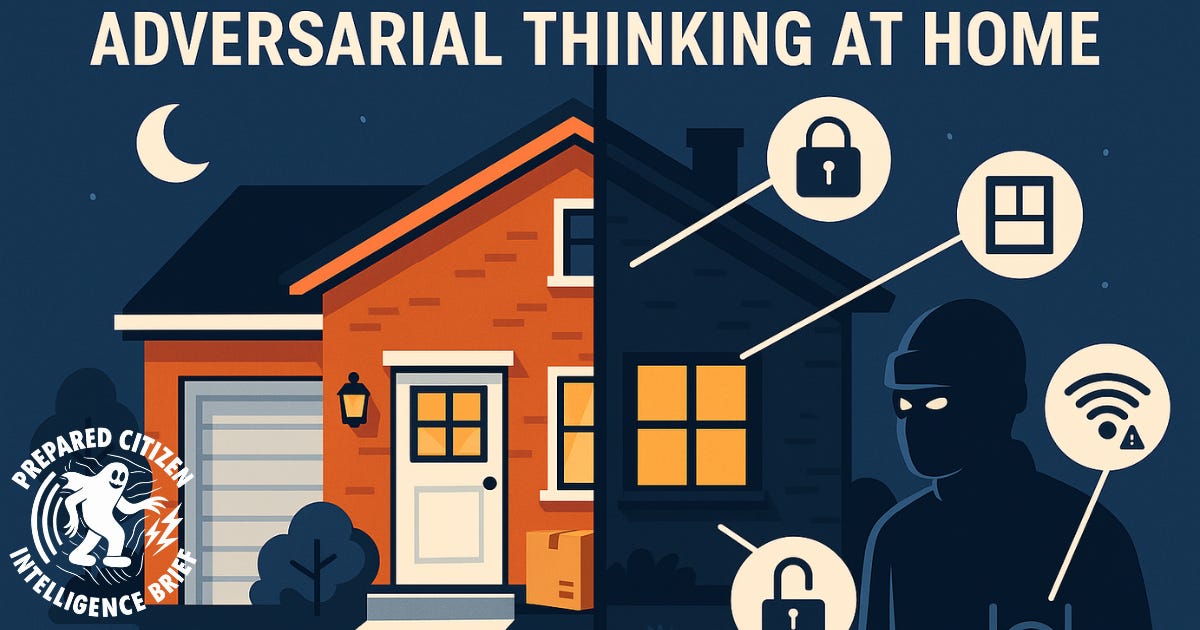
Most people think about their homes and families through a comfort lens: is it warm, safe, welcoming?
Criminals, opportunists, and even online scammers think about them differently. They see doors, windows, devices, and human behavior as vulnerabilities.
That difference in perspective is the security gap. If you never test your own life through an adversary’s eyes, you’re betting everything on hope.
Adversarial thinking is structured imagination…training yourself to look at your environment the way an intruder would.
Law enforcement, military, and security professionals do it for a living. Civilians can use the same method to expose blind spots before someone else does.
Step 1: Entry Points
Every adversary starts with the basics…where can I get in?
Doors: Weak deadbolts, flimsy strike plates, or decorative glass near locks. Many burglars simply kick a door.
Windows: First-floor and basement windows are the most common forced entry points. A simple latch isn’t a lock.
Garages: An overlooked target. Remotes left in cars, doors with weak emergency releases, and side doors with poor locks are easy pickings.
Deliveries: Amazon packages stacked at your door don’t just attract thieves…they also advertise that nobody’s home.
Exercise: Walk around your house at night with an outsider’s eyes. Which door or window would you try first if you wanted in? If the answer comes quickly, you’ve found your weakest link.
