
Bandar Abbas and the Real Blockade: What the Strikes on Iran Actually Signal
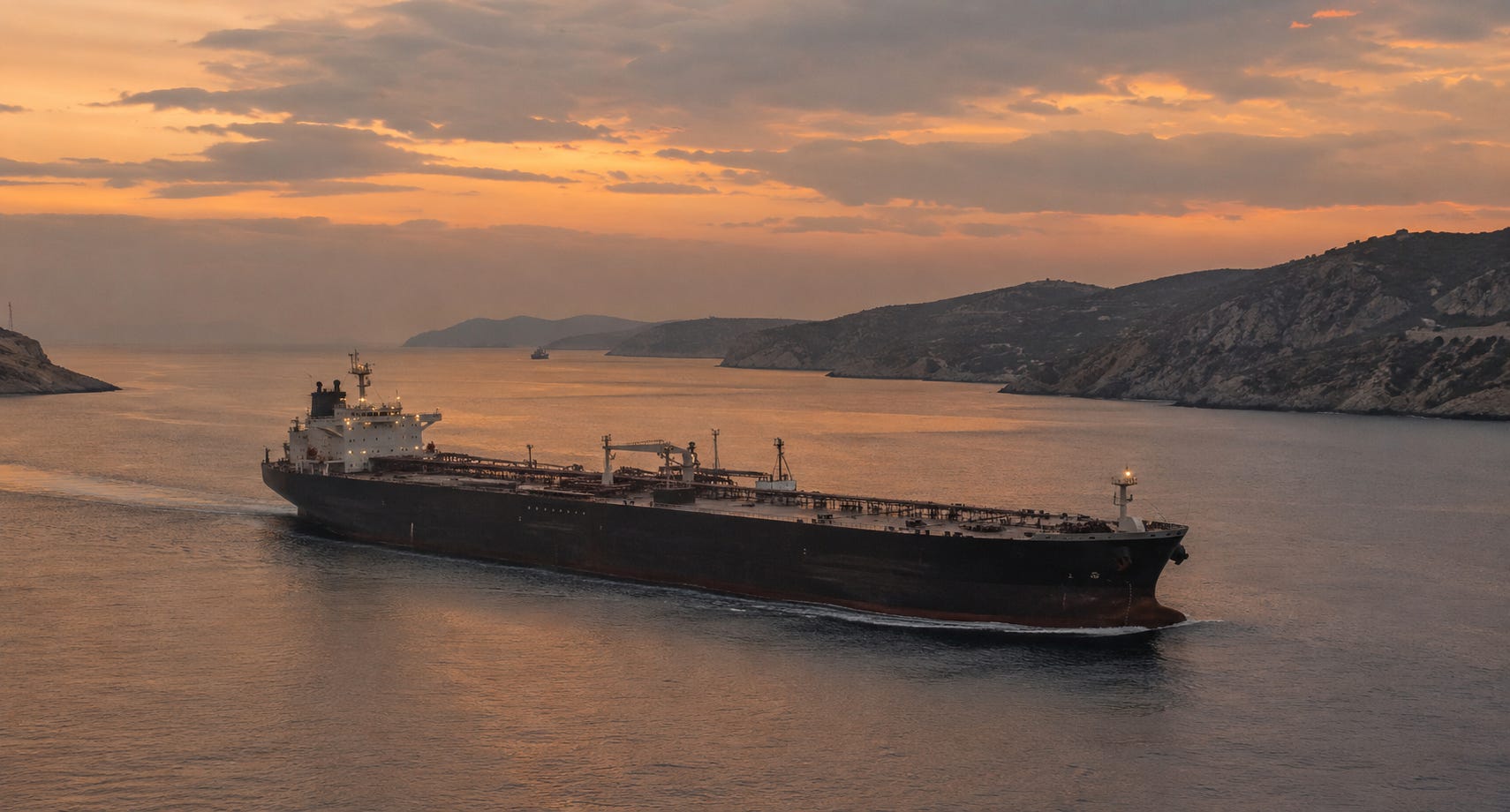
Six ships crossed the Strait of Hormuz in a twelve-hour window this week. Two weeks ago, the strait was averaging eighteen to twenty-two crossings a day.
Before this war started back in February, it was running around one hundred thirty ships a day, moving roughly a fifth of the world’s oil.
Nobody had to blockade the strait to get numbers like that. The market did it on its own, and that’s the part that almost none of the coverage is actually explaining.
Here’s what’s public.
On July 12, CENTCOM forces used Corsair unmanned surface vessels, essentially naval attack drones, to hit the submarine and ship maintenance yard at Bandar Abbas.
It was the first time the US has used sea drones against a state target this way.
Strikes continued over the following two nights, expanding to the islands of Kish, Qeshm, and Abu Musa, hitting coastal defense systems, missile and drone sites, and other maritime capability.
On July 13, Trump notified Congress that limited military action had resumed and reinstated what his administration is calling the Iranian Blockade: Iranian vessels barred outright, everyone else allowed through for a 20 percent cargo toll that funds US protection.
Iran moved first, actually.
In late June and early July, Iranian forces struck and disabled two tankers, and the UAE reported Iranian missiles hit two of its flagged vessels, killing one crew member.
That’s what broke the ceasefire the US and Iran had signed in June, the one that had briefly pushed oil prices back down after months of war.
None of that is a secret.
It’s been reported everywhere, with casualty figures still unverified and both sides disputing details.
What’s been reported a lot less is what happened to the price of getting a ship through the strait at all, and that number tells you more about how serious this is than any press release from either government.
Before the war, war-risk insurance on a Hormuz transit ran around 0.001 percent of a vessel’s value.
It’s now sitting around 4 to 5 percent.
For a $150 million tanker, that’s the difference between a $375,000 insurance bill and one running $1.5 to $4.5 million, for a single trip.
Major maritime insurers have suspended or repriced coverage outright.
The International Maritime Organization has advised ships to avoid the strait entirely until crew safety can be assured.
That’s the real signal.
Diplomatic statements get written by people managing a message.
Insurance rates get written by people managing exposure with actual money behind the number.
When the private market says a transit through Hormuz isn’t something it wants to price anymore, that’s a more honest read on risk than anything coming out of a State Department briefing.
Here’s the part that should get more attention than it has.
The Trump administration directed the US International Development Finance Corporation to step in with political risk insurance, backing a reinsurance facility worth up to $40 billion.
In plain terms: the private insurance market looked at Hormuz and effectively said no, and the US government is now underwriting the risk itself.
Governments don’t build $40 billion backstops for problems they expect to resolve in a few weeks.
They build them when they’ve concluded the private market’s assessment is correct, and the exposure is going to be there for a while.
The 20 percent toll isn’t just a wartime measure either.
It’s the US positioning itself as the permanent gatekeeper and insurer for a chokepoint that moves a fifth of the planet’s oil.
That’s an entirely different animal than a blockade, and it’s built to outlast the news cycle that’s covering it.
There’s a precedent for this, and it’s not one I’m seeing cited anywhere.
During the Iran-Iraq War, Iran started targeting tankers in the Gulf, and the US response was Operation Earnest Will: reflagging Kuwaiti tankers under the American flag and escorting them with Navy convoys starting in 1987.
That arrangement was supposed to be a stopgap.
It ran for roughly four years and ended with the US Navy in direct combat with Iranian forces during Operation Praying Mantis in 1988, the largest US surface naval engagement since World War II.
Once a government builds the machinery to backstop a maritime chokepoint, it does not tear that machinery down quickly, because doing so means admitting the private market was right that the danger never actually left.
The six-ships-in-twelve-hours number matters more than any of the strike reporting, because it shows the strait effectively closing itself through economics before a formal blockade even holds up in practice.
That’s your leading indicator.
Watch the transit counts and the insurance rates, not the ceasefire announcements.
What to do:
Track transit volume and war-risk insurance rates as your real indicator, not diplomatic headlines. News cycles about talks and truces bounce constantly. Insurance rates move on money, not messaging, and they’ve already told you how bad this is.
Budget for a sustained fuel price increase, not a spike that reverses in a month. The Earnest Will precedent ran four years once the convoy and insurance architecture was in place. Plan your fuel and grocery spending around months of elevated prices, not days.
Build or top off a two-to-four-week fuel and pantry buffer now, while supply chains are still functioning normally. Do it before a headline triggers a run on gas stations, not after.
If you have any business, family, or logistics ties to Gulf shipping or insurance, watch for the toll-and-blockade structure to expand rather than just watching for more strikes. That structure is what will move freight and fuel costs for everyone downstream of it, including people who never think about the Strait of Hormuz.
Watch how Iran targets third-country shipping, like the UAE-flagged tankers already hit, as your signal for how far this spreads regionally. Historically, that’s the mechanism by which a two-country conflict pulls in the rest of a region.
The Edge
Here’s what I don’t have an answer to yet. Is the DFC’s $40 billion facility meant as a temporary bridge, or is it the new permanent architecture for insuring Hormuz transit going forward?
If it’s the second one, that’s a bigger story than the drone strikes, because it means the US government just took on direct financial exposure to every tanker crossing that strait, indefinitely, funded by American taxpayers rather than shipping premiums.
I haven’t seen anyone in the mainstream coverage ask that question directly yet. I’m watching for it, and I’ll report back when there’s an answer.