
Drone Swarm Escalation and New Terror Financing Tactic
Analyst Insight
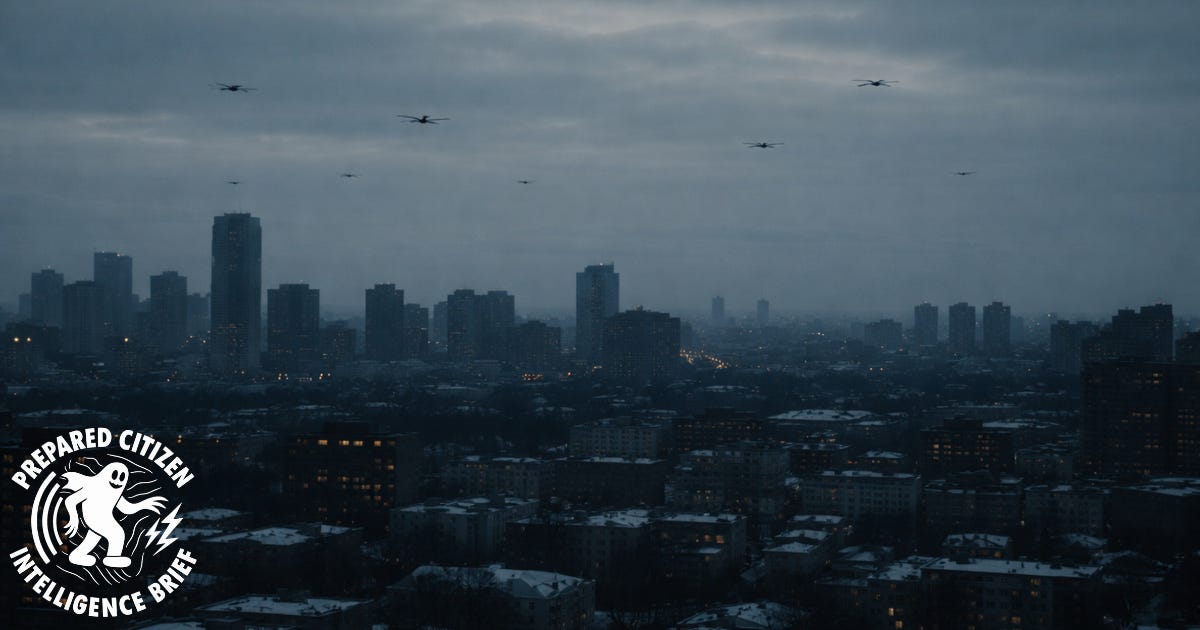
Russian forces escalated the war in Ukraine with the largest drone‑and‑missile swarm seen to date, killing civilians and crippling power infrastructure; this attack coincides with sabotage and diplomatic signals that Moscow is hardening its posture, increasing the risk of wider confrontation.
Domestically, a U.S. indictment revealed that the Venezuelan gang Tren de Aragua operated a nationwide ATM jackpotting network that siphoned more than $40 million from ATMs to fund terrorism.
Together, these developments show how state and non‑state actors are innovating to degrade critical infrastructure and finance violence, demanding heightened vigilance across military, financial, and civil spheres.
Domestic Security and Civil Unrest
Expanding use of counter‑terrorism laws: London police arrested climate activist Greta Thunberg at a pro‑Palestine protest under the Terrorism Act, signaling a widening use of national‑security powers against non‑violent activism and foreshadowing broader crackdowns on dissent.
Organized criminal innovation: U.S. prosecutors charged 54 members of Venezuela’s Tren de Aragua for using malware to force ATMs to dispense cash, stealing millions of dollars that were routed to terrorist activities. The scale and coordination of the scheme reveal a new criminal tactic targeting financial infrastructure, showing how gangs can rapidly monetize cyber intrusions.
Infrastructure and Grid Alerts
Social media vulnerability: Widespread outages on Facebook and Instagram, verified by outage tracking data, shows the fragility of centralized communication platforms and highlight the need for alternate channels during emergencies.
Mobile malware threat: Uzbek Android users have been targeted by SMS‑stealing malware, pointing to a spreading vulnerability in mobile devices that could compromise personal accounts and disrupt emergency communications.
Drone swarms and grid resilience: A massive Russian drone assault employing 635 Shahed‑type UAVs overwhelmed Ukrainian defences and damaged energy facilities, resulting in emergency power outages and demonstrating how swarm attacks can degrade national grids.
Extreme Weather and Natural Hazards
Northeast winter storm risk: Forecasts call for a quick‑moving winter storm after Christmas, with snow and ice from a series of clipper systems poised to impact major Northeast cities. AccuWeather notes that storms on Christmas Eve and the day after Christmas could bring ice and 3-6 inches of snow to parts of New England and the mid‑Atlantic, creating hazardous travel and potential power disruptions.
Border and Immigration
Cross‑border aviation incident: A Mexican Navy medical transport plane crashed in U.S. waters near Galveston, killing five people and leaving one missing. The crash of a military aircraft on a humanitarian mission highlights cross‑border operational risks.
Anti‑cartel strike: U.S. forces conducted a kinetic strike on a low‑profile narcotics boat in the Eastern Pacific, killing one trafficker. This small‑scale but lethal action reflects ongoing escalation in counter‑cartel operations.
Church, Mission, and Civilian Safety
Cultural and religious targeting: Thai forces destroyed a Hindu deity statue after seizing territory along the Cambodia border, signaling a willingness to target cultural symbols and raising concern for the safety of religious sites, missionaries, and aid workers in contested regions.
International Flashpoints
Russian escalation on multiple fronts: Russia launched a record drone‑and‑missile swarm against Ukraine, killing civilians and causing widespread power outages. Simultaneously, a fire and explosion at a military ship‑repair facility in Nizhny Novgorod, systematic torture of Ukrainian POWs, the evacuation of Russian diplomats’ families from Venezuela, and Su‑57 fighter jets buzzing a U.S. carrier indicate a hardening Russian posture and heightened risk of wider confrontation.
Middle East volatility: An Israeli strike near Sidon in Lebanon killed at least three people, while Yemen’s government and Houthi rebels agreed to exchange nearly 3,000 prisoners in a rare de‑escalatory move. The juxtaposition of targeted violence and diplomatic progress shows the region’s volatility.
Border conflict and cultural destruction: Thai forces destroyed a Hindu statue on seized Cambodian territory, reflecting a new tactic of cultural erasure amid border tensions and hinting at potential escalation.
Supply Chain and Liberty Watch
Maritime and logistics vulnerabilities: An explosion at a Russian ship‑repair facility illustrates how sabotage and counter‑narcotics operations can disrupt maritime supply chains and military readiness.
Financial system stress: The Tren de Aragua jackpotting campaign drained millions from ATMs across the U.S., exposing weak points in banking infrastructure and highlighting how criminal networks can divert funds to finance terrorism.
Signals to Monitor
Increases in the scale or frequency of drone and missile attacks on critical infrastructure, especially those employing large numbers of low‑cost UAVs.
Use of counter‑terrorism statutes against non‑violent activists or protests, indicating shifts in domestic policing and potential civil liberty erosion.
Escalation of cyber intrusions targeting ATMs and mobile devices; adoption of similar jackpotting tactics by other criminal networks.
Social‑media outages or disruptions during emergencies, which could hinder information sharing and crisis coordination.
Red Flags
Sustained or larger swarms of drones targeting energy grids or causing cascading blackouts.
Rapid policy moves that criminalize protest activities or expand surveillance powers without oversight.
Evidence of ATM malware appearing in additional financial networks or regions, suggesting broader compromise.
Signs of retaliatory strikes following the Mexican plane crash or further military posturing by Russia abroad.
Preparedness Action Items
Review and test backup communication channels that do not rely on mainstream social platforms for emergency coordination.
Update cybersecurity protocols for financial systems and personal devices to detect and block ATM jackpotting and SMS‑stealing malware.
Monitor travel advisories and secure supplies ahead of the post‑Christmas winter storm in the Northeast; ensure vehicles and homes are prepared for snow and ice.
Maintain situational awareness of protest legislation and potential impacts on freedom of movement; adjust organizational security plans accordingly.