
Robert Jay Josett was placed on administrative leave from the Costa Mesa Police Department in December 2023. His department had figured out he was using police databases to track his mistress, her boyfriends, and his own wife. The investigation was underway, and the case was building.
Six months later, he logged into Flock Safety and pulled the new boyfriend’s address in Torrance.
He was a suspended officer, under investigation, with no active cases and no legitimate reason to touch the system. He accessed it anyway, and the system let him right in.
That detail…a cop who had already been caught, already been suspended, accessing a nationwide surveillance network without anyone stopping him is the thing you should not be able to stop thinking about.
Because the entire sales pitch for Flock Safety, a company now valued at $7.5 billion, is built on the claim that its systems have controls. That the access is secure. That only authorized users with legitimate purposes can query a network of over 64,000 cameras spread across the country.
Josett was not authorized. He had no legitimate purpose. He got in anyway.
What Flock Actually Is
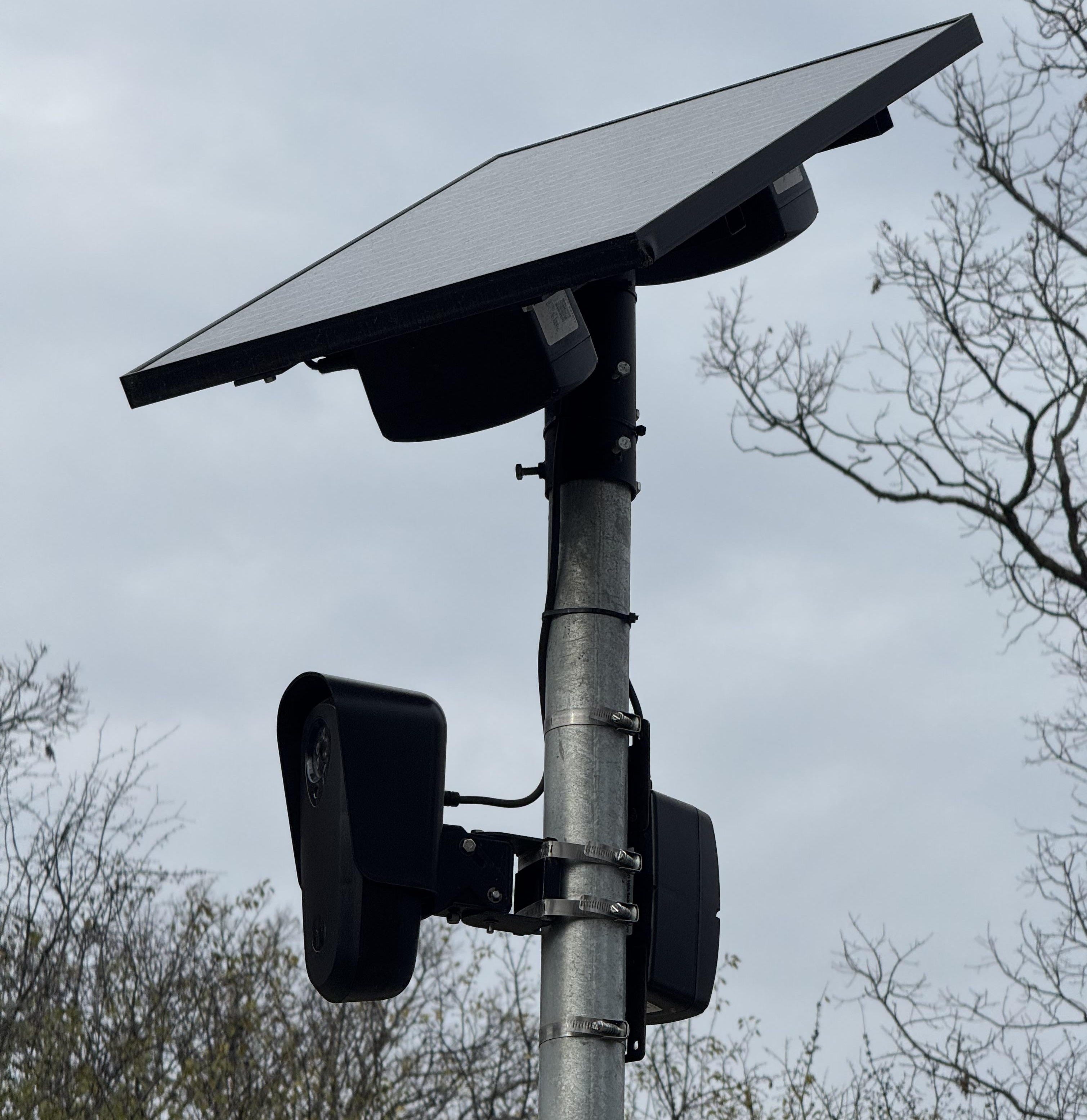
Flock Safety sells cities what it calls a public safety platform. The core product is a network of AI-powered cameras that read license plates and transmit that data to a centralized cloud database hosted on Amazon Web Services.
Every camera captures every vehicle that passes it. The data is queryable by any law enforcement agency that subscribes.
That last part is important. The database does not belong to your city. It does not sit on a government server that your city controls. It lives on Flock’s private cloud.
That means public records laws, FOIA requests, and municipal oversight mechanisms do not reach it. Residents in any city using Flock have no direct public records access to what was searched, when, by whom, or why.
The network enables cross-jurisdictional queries. A cop in one state can search vehicle movements across the entire Flock network, covering hundreds of jurisdictions, from a desk.
If enough cameras cover your neighborhood, your commute, and your daily stops, a motivated analyst can build an accurate picture of your life without ever leaving the office.
Where you live. Where you work. What time you drop your kids off. What businesses you visit. All of it attached to your plate, which is attached to your name.
Josett used this to track a woman and the men in her life.
Between June and December 2023, he made 13 inquiries into the CLETS database on people unrelated to any active case.
He used Flock to locate specific vehicles.
He contacted his mistress more than 100 times in a single day over a nine-month stretch, via text, phone calls, and social media.
When the department put him on leave, the Flock system should have cut his access.
It did not. Or if it did, it failed to hold.
He pleaded guilty in April 2026 to three misdemeanors: unauthorized computer access and fraud, repeated harassing phone calls, and contempt of court for violating a restraining order.
He received three years of probation and was ordered to complete a 52-week domestic violence program. No felony charges.
This Is Not One Bad Officer
The Institute for Justice has documented at least 16 cases, nationwide, of officers using ALPR systems to stalk romantic partners, ex-partners, or rivals.
These are only the cases that made the news. The list includes:
A Riverside County, California deputy who tracked a friend’s vehicle through the department’s Flock system.
A Milwaukee officer who queried a woman and her ex-partner nearly 180 times over two months.
An Orange City, Florida cop who searched an ex-girlfriend’s family more than 100 times over seven months.
A Monroe County, Florida sheriff’s deputy who pulled over a woman he met on a TV set by running her plate and then tracking her movements.
Nearly all of them were eventually charged and fired. But the critical question is not how many got caught…it’s how many didn’t.
Every law enforcement officer in every agency with a Flock contract has the ability to run queries on any plate in the network.
Most departments have weak or nonexistent audit log review. Some have no audit function at all.
The system relies on the honor system, enforced occasionally after the fact when misconduct becomes visible enough to investigate. That is not access control, it is the appearance of access control.
The full breakdown - including the Palantir data pipeline that routes your movements to federal agencies, the confirmed cases of ICE and Border Patrol querying local Flock data, the cities that have already canceled contracts after discovering unauthorized federal access, and the practical steps to find out if you’ve been searched - is available to paid subscribers. Join Prepared Brief to read the rest.
