
Iran hackers hit US water systems. No strike required.
Analyst Insight
The story getting buried under Iran strike speculation is the water systems angle.
A preliminary US intelligence assessment has already tied Iran-linked hackers to attacks on more than 30 Minnesota water systems, part of a wider intrusion across seven states, and that assessment landed before any US strike decision was made.
The domestic threat surface is already active, independent of what happens in the Gulf this weekend.
Iran’s simultaneous dispersal of military assets across multiple provinces, evacuating bases and closing gas stations in some cities, reads less like posturing and more like a country actually preparing to absorb a hit.
Domestic Security and Civil Unrest
Twin Falls, Idaho: a shooting near an In-N-Out Burger left three dead and two injured. Idaho’s governor confirmed an active shooter situation and asked residents to avoid the area while law enforcement responded.
Miramar Air Base, San Diego, California: an F-35 crashed after a reported in-flight “mishap.” Crew condition was unknown as of this writing.
Lafayette Parish Courthouse, Lafayette, Louisiana: evacuated Friday morning after a bomb threat was called in. Roughly 400 people were removed. A K-9 sweep found no danger and an all-clear was given.
Incident pattern remains localized with no confirmed coordination between events.
Infrastructure and Grid Alerts
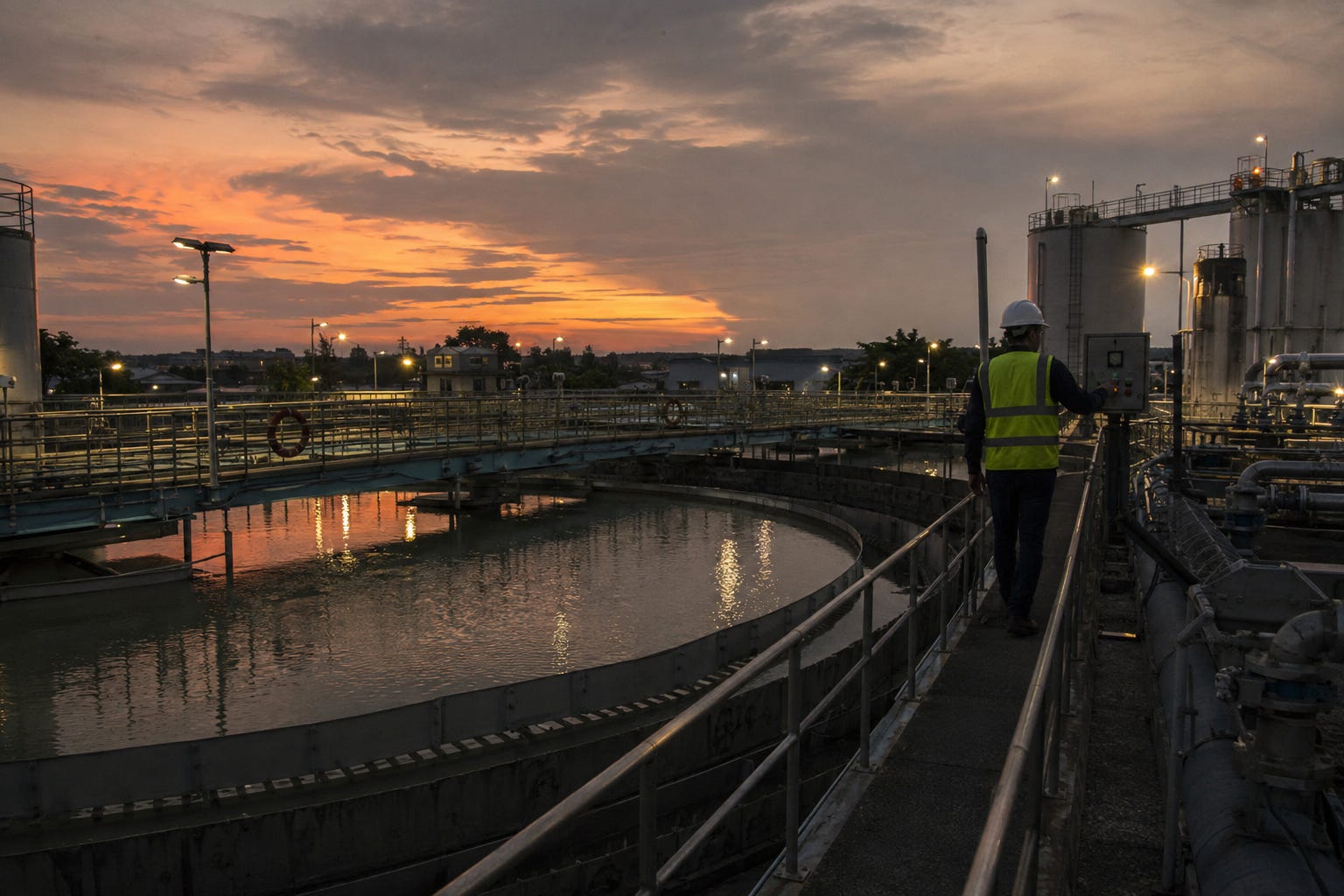
Water utilities, Minnesota and six other states: federal investigators are probing whether Iranian state-backed hackers are behind a coordinated cyberattack campaign against water systems. A preliminary US intelligence assessment names Iran as the likely source. Officials say the intrusions disrupted utility operations but did not contaminate drinking water or create a known public health risk.
Apple Pay: outage reports began climbing Friday evening, around 4:30 PM CDT, per user-reported outage trackers. No cause has been confirmed and the scope of the disruption is unclear.
Confirmed water system intrusions across seven states are the most significant infrastructure story of this cycle. The Apple Pay disruption remains unconfirmed in scope and cause.
Extreme Weather and Natural Hazards
Cedar Grove, Indiana: a tornado was in progress. Residents in the area were told to seek shelter immediately.
Indianapolis, Indiana: a tornado warning was issued for portions of the metro.
Central and southeastern Washington, northern Oregon: extreme fire weather Saturday. Sustained west winds of 30+ mph, gusts of 40 to 50+ mph, and humidity dropping below 15 percent. Hazardous wind conditions could last up to 6 hours, with elevated wind risk running 12 to 14 hours total.
Active tornado threat in the Midwest and critical fire weather in the Pacific Northwest both call for real-time monitoring today, not just standing preparedness.
International Flashpoints
Iran energy strike posture: multiple outlets report President Trump is weighing a major escalation alongside Israel that could target Iranian energy infrastructure. CBS News reports the US and Israel are preparing strike options against Iran’s energy sector as soon as this weekend, though officials stress no final decision has been made. Senior US officials also reportedly discussed cutting electricity to Tehran, with no decision made as of Friday afternoon.
State Department travel guidance: Americans in Israel, Iraq, and Jordan are urged to exercise heightened caution due to escalating tensions. US embassies are urging citizens to “consider departing” the Middle East while commercial flights are still running, or be ready to leave if the situation worsens. The advisory warns of possible flight cancellations and airspace closures, and notes Iran-linked targeting risk has expanded into new areas, including Egypt.
Gulf shipping and airspace: UKMTO reports a tanker was struck by an unknown projectile roughly 11 nautical miles northeast of Lima, Oman, hitting the engine room. No casualties or environmental impact were reported, but the vessel is not under command. Separately, Kuwait’s armed forces say air defenses are actively responding to hostile drone threats from Iran.
Iran military posture: Iran is reportedly dispersing military personnel and strategic assets across multiple provinces, including evacuations at Vahdati Air Base near Dezful, Shahid Rajaee Port in Bandar Abbas, and the Al-Mahdi Garrison near Urmia, which is reportedly linked to an underground missile complex. IRGC, intelligence, and security facilities are reportedly being evacuated or dispersed in Tehran, Shiraz, Kermanshah, Bandar Abbas, and Neyshabur, and gas stations in Qods City have reportedly closed over a fuel shortage. Iran’s parliament says any US strike will draw retaliation against “all of the enemy’s bases,” not just targets in the Persian Gulf. Israel has reportedly moved to its highest military alert level.
Moscow, Russia: an explosion at the Balzi Rossi restaurant, now described by Russian authorities as a bombing, killed at least three people and injured between 15 and 24, depending on the source. The venue had been closed for a private event. Russian channels claim senior military officers, including the Aerospace Forces commander-in-chief, were in attendance. Cause and intended target remain unconfirmed.
Kyiv, Ukraine: Russia launched a large-scale overnight missile and drone attack, firing 35 missiles and 185 drones. Nine people were killed and 23 injured, including 4 children. Strikes hit five districts, destroyed five ambulances, damaged 20 civilian vehicles, and hit at least 18 buildings, including a school and the Lithuanian Embassy.
Ufa, Russia: Ukrainian long-range drones struck the Ufa oil refinery complex, which represents roughly 8 percent of Russia’s total refining capacity. The facility is now on fire. Energy infrastructure hits at this scale have historically shown up in global oil price movement within days.
Spain: more than 60,000 migrants have crossed into Ceuta since a perimeter fence breach, according to Spanish authorities. Home invasions, forced squatting, and looting have been reported across the peninsula. Italy has formally suspended its Schengen arrangement with Spain in response. Spain has since installed a 500-meter floating barrier off Ceuta following a mass crossing from Morocco that killed at least 67 people.
Multiple independent flashpoints are converging on the same 48 to 72 hour window. Travel risk in the Middle East is operational right now, not theoretical.
Signals to Monitor
If the US and Israel launch strikes on Iranian energy infrastructure this weekend, expect immediate airspace closures and flight disruptions across the Gulf region, along with possible fuel price movement in the US within days.
If Iran-linked actors expand water system intrusions beyond the seven states already confirmed, expect boil-water advisories or localized service disruptions in newly affected utilities.
If the Balzi Rossi bombing in Moscow is confirmed as a targeted strike on Russian military leadership, expect a corresponding escalation in the Ukraine war within days.
If a second Gulf tanker is struck following today’s Hormuz incident, expect shipping insurers to raise war-risk premiums, which raises fuel and shipping costs downstream.
Red Flags
If a US strike on Iran is confirmed this weekend, expect immediate volatility in fuel prices. Top off vehicle tanks and portable fuel storage now, not after the news breaks.
Any confirmed contamination or forced shutdown at a US water utility tied to the ongoing intrusion campaign should prompt an immediate check of your household water storage.
If US Middle East travel guidance escalates from “consider departing” to a formal ordered departure, treat that as the signal to cancel any near-term travel plans to the region.
Preparedness Action Items
[Infrastructure] If you’re in Minnesota or one of the six other affected states, confirm your water utility’s public notices directly rather than relying on secondhand reports. Keep your normal water storage reserve topped off regardless of what your utility says.
[International Flashpoints] Fuel prices can move fast if a strike on Iranian energy infrastructure happens this weekend. Top off vehicle tanks and any stored fuel now, before a headline forces everyone else to do the same.
[International Flashpoints] If you have travel booked to Israel, Iraq, Jordan, or anywhere else in the Middle East in the next 30 days, review your airline’s cancellation policy today.
[Extreme Weather] If you’re anywhere near Cedar Grove or Indianapolis, Indiana, confirm you have a way to receive tornado warnings that doesn’t depend on cell service.
[Domestic Security] The Twin Falls shooting and the Lafayette courthouse bomb threat are unrelated incidents, but both are a reminder to map an exit route any time you’re in a public venue.
Preparedness Focus of the Day
Today’s dominant thread is critical infrastructure under quiet pressure: water systems compromised digitally, energy infrastructure targeted physically, and the systems tying it all together, payments, grid, ports, showing small failures at the same time. If you haven’t actually run a check on your water storage in the last 90 days, not just how much you have but whether it’s still potable and your filtration gear still works, this is the week to do it.
Gear Pick of the Day
The Sawyer Squeeze is a compact water filter that removes bacteria and protozoa from tap or field water without power or replacement cartridges. With water utilities in seven states dealing with a possible Iran-linked cyber intrusion, having a filtration backup for tap water is a reasonable line item this week, not overkill.
https://amzn.to/4xgAz0i (This is an Amazon affiliate link. It costs you nothing extra and helps support Prepared Brief.)