
Minutes Before Violence: The Three Crowd Signals Most People Miss
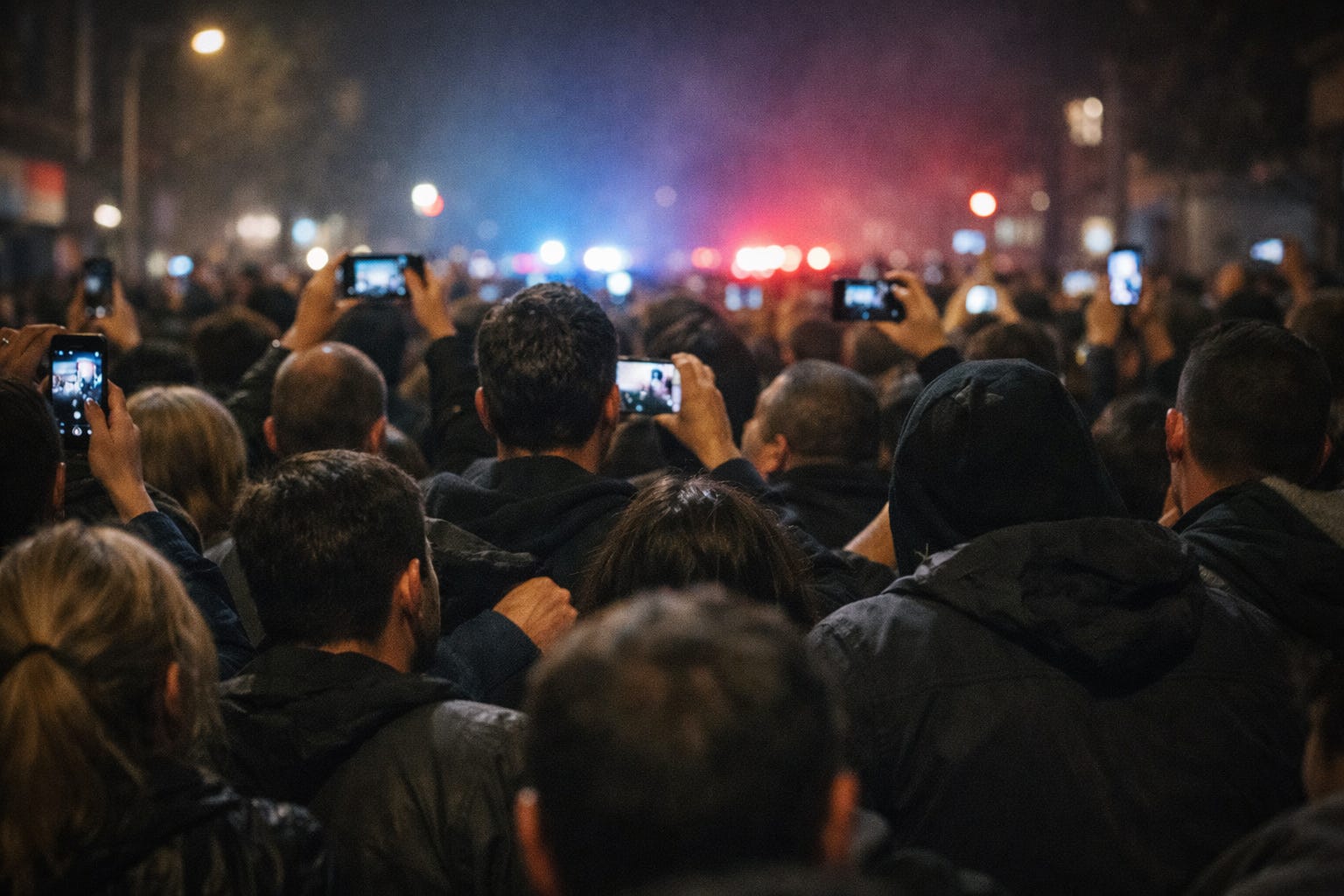
You are standing in a crowd of several thousand people. Nothing violent has happened yet.
Music is playing somewhere behind you. People are filming with their phones. Conversations are loud but casual.
Most of the crowd believes the event is winding down. But a few small things have already changed.
Movement has slowed. People are beginning to cluster together.
And somewhere near the front of the crowd someone just threw the first object.
If you stay another five minutes, leaving may no longer be easy.
That is how most crowd violence begins.
Crowds rarely turn violent without warning. What makes them dangerous is not how suddenly violence appears, but how quietly the warning signs begin.
In almost every riot, stampede, or crowd assault, there is a short window where the environment changes in subtle ways. Most people miss it. They assume the situation is still under control.
By the time the danger becomes obvious, movement has already collapsed.
Security professionals watch for specific signals that appear minutes before violence begins. These signals are behavioral changes inside the crowd itself.
They are visible and predictable, and if you recognize them early enough, they give you time to leave.
Scenario
It is late evening in a downtown entertainment district.
A large protest has moved through the area during the afternoon. By nightfall the streets are still packed. Thousands of people are standing in the roadway and spilling onto sidewalks.
At first the atmosphere feels loud but normal.
Music plays from portable speakers. People chant slogans and wave signs. Groups move slowly through the crowd, talking and laughing.
Police vehicles sit several blocks away but have not approached the crowd yet.
Most people assume the event is winding down.
But if you watch closely, the environment has already begun changing.
And the first signal appears.
Signal One
Crowd Compression
Peaceful crowds move.
People drift in and out. Groups shift positions. Individuals walk past one another constantly.
When a crowd is about to turn volatile, that movement begins to slow…then it stops.
People stop walking and begin standing in place.
Heads turn toward the same direction, conversations pause, and phones rise above the crowd as people try to film something happening farther down the street.
Within minutes, the space around you begins feeling tighter.
People who were passing you moments earlier are now shoulder to shoulder.
The crowd has stopped behaving like a gathering.
It has become an audience, and audiences are unstable.
What This Means
This is the moment when most people make a critical mistake.
They assume something interesting is happening and move closer to see it.
But compression is the first stage of crowd danger.
Once the crowd becomes dense enough, individuals lose their ability to move freely.
And once mobility disappears, the environment can become dangerous extremely quickly.
The Moment Most People Miss
Compression is the warning.
The real danger begins when the second signal appears, because that is when the crowd’s emotional tone changes and the situation can escalate in seconds.
Most civilians do not recognize this shift until it is already happening.
Security professionals watch for it constantly.
Because once this signal appears, the safest decision is usually the same:
Leave immediately.
The Second Signal Is the One That Changes Everything
Crowd compression alone does not cause violence.
It only creates the conditions for it.
What actually triggers the shift from tension to confrontation is the moment when the emotional state of the crowd changes.
Security teams sometimes call this the tone shift.
It happens fast.
A crowd that was loud but neutral suddenly becomes synchronized. Voices begin repeating the same chant. Anger spreads outward through the group like a wave.
When that happens, the situation can escalate in seconds.
And once the third signal appears, leaving becomes dramatically harder.
The problem is that most civilians do not recognize these signals until the crowd has already started moving.
Security professionals watch for them constantly.
Because once they appear, the safest decision is almost always the same.
You leave.
Immediately.
Most people don’t.
And that is where the real danger begins.
