
Near-Term Winter Storm Readiness - What to Do
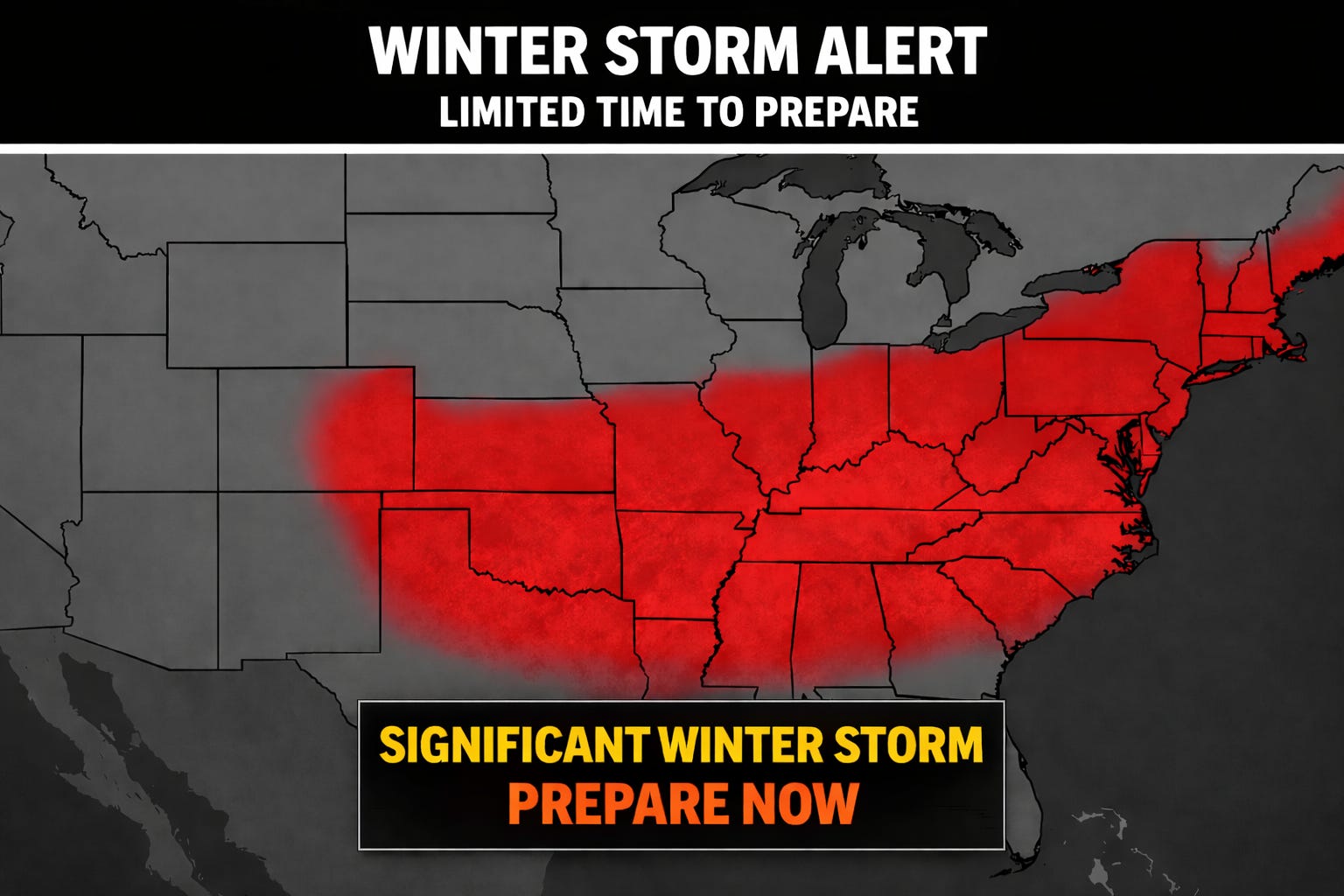
Attention: If you know someone who may be impacted by winter weather or power loss, consider sharing this brief. The preparation window is short.
ANALYST INSIGHT
This brief intentionally excludes forecasts, accumulation models, and probability language. The decision window is already open.
When winter systems begin impacting power, water, and transport simultaneously, the damage does not necessarily come from snowfall totals.
It comes from loss of utilities, frozen infrastructure, and delayed response.
The objective is to prevent cascading failures inside the home and reduce exposure outside it.
Most damage during freezes occurs after power loss, after pipes freeze, or after people attempt last-minute movement.
BASELINE QUESTION CHECK (READ THIS FIRST)
If you cannot answer “yes” to most of the following, your household is not ready:
Do you have light that does not rely on grid power?
Do you have fuel on hand for generators, lanterns, or cooking?
Do you have a way to heat water and cook food without electricity?
Are all vehicles already fueled?
Do you have a non-cellular way to receive information?
Do you have cookware that can tolerate open flame?
POWER AND LIGHT CONTINUITY
Immediate actions:
Stage multiple light sources in occupied rooms now. Do not rely on one device or cell phones.
Oil lamps: confirm usable wicks, sufficient lamp oil, and stable placement.
Battery lanterns and flashlights: install fresh batteries now.
Solar lights: bring indoors after charging. Do not leave them outside during icing.
Fully charge all power banks, phones, and rechargeable devices before conditions degrade.
Generators:
Fuel on hand matters more than wattage.
Confirm oil level and extension cord routing now.
Identify outdoor placement before weather deteriorates.
Never plan setup in freezing rain or high wind.
HEAT MANAGEMENT WITHOUT GRID POWER
Primary principle: consolidate and isolate.
Identify the smallest interior room to occupy if power is lost.
Close off unused rooms early to retain heat.
Stage blankets, sleeping bags, layered clothing, hats, and gloves indoors.
Layer clothing as if you were outside. Do not rely on ambient room temperature.
Fireplaces and combustion heat:
Verify flue is fully open before lighting.
Confirm carbon monoxide detectors are functional before use.
Do not improvise heating with grills, stoves, or generators indoors.
WATER, COOKING, AND SANITATION
Water access:
Municipal Water Users
Understand that water pressure may drop or be lost after prolonged power outages or main breaks caused by freezing.
Fill tubs, buckets, or containers for non-potable use if freezing conditions are expected.
Locate and mark your emergency shutoff at the street-side meter before you need it.
If pressure drops or lines freeze, avoid running multiple fixtures simultaneously to reduce stress on thawing pipes.
Private Water Well Users
Assume no water once power is lost unless you have a generator capable of running the well pump.
If you have generator capability, confirm voltage, amperage, and startup load compatibility now. Do not test this during the storm.
Store drinking and sanitation water before power loss. A full pressure tank only provides limited reserve.
Protect exposed well head piping, pressure tanks, and above-ground lines from freezing.
If the well house or pump enclosure is unheated, insulate now and consider a safe, thermostatically controlled heat source if available.
All Systems
Know where your main shutoff is and how to close it fully.
A frozen pipe that thaws under pressure causes more damage than a controlled shutdown.
Do not wait for visible leaks before acting.
Cooking:
Confirm at least one non-electric cooking method: gas stove (manual ignition), propane burner, outdoor grill, or fire-safe option.
Stage cast iron or fire-tolerant cookware now.
Ensure a manual can opener is accessible.
Hot liquids matter. They raise core temperature and morale.
FREEZE DAMAGE PREVENTION (HIGH-CONFIDENCE FAILURE POINTS)
Water shutoff valve:
Locate the city-side shutoff at the meter.
Clear debris and mark it visibly in case of snow or ice.
Confirm you know how to fully close it.
Exterior plumbing:
Protect all exterior hose bibs from freezing.
Passive covers can help in mild cold, but they do not flow water.
Freeze-activated flow devices that allow a controlled stream when temperatures drop provide better protection during prolonged freezes.
Regardless of method, disconnect hoses and verify the device can drain freely.
Interior plumbing:
Open cabinets under sinks on exterior walls.
If safe and available, stage a space heater near vulnerable runs (do not leave unattended).
Toilets on exterior walls should be flushed periodically during prolonged freezes.
Sprinkler systems:
Shut off accessible above-ground components and drain if possible.
Do not force rusted underground valves. Breaking one creates a larger failure.
Tankless water heaters:
Exterior units: insulate exposed piping inside access panels.
Interior units: monitor condensation drain lines. Minor dripping during freezes is common. Bucket placement is sufficient.
Appliances:
After extended outages, monitor washing machine drain cycles closely.
Frozen P-traps have caused post-storm flooding once power returns.
Faucets:
A drip is not sufficient. Use a continuous stream.
Two-handle faucets: open hot first, then cold until flow increases.
Single-handle faucets: center the lever to mix hot and cold.
The fixture farthest from the meter/water source should have the strongest flow.
INFORMATION AND COMMUNICATIONS
Stage a battery-powered, hand-crank, or rechargeable radio.
Do not rely exclusively on cellular networks during ice or wind events.
Assume intermittent service even if towers remain powered.
Information continuity reduces panic and poor decisions.
MOBILITY AND VEHICLE POSTURE
Fuel vehicles now.
Do not plan fuel stops during precipitation or icing.
Stage emergency kits, blankets, and ice scrapers in each vehicle.
Once conditions deteriorate, reduce movement unless necessary.
Most winter injuries occur during unnecessary travel.
BOTTOM LINE
This is about preventing secondary failures: frozen pipes, carbon monoxide incidents, food loss, and avoidable exposure.
Prepared means ready before conditions force decisions.
Great advice !