
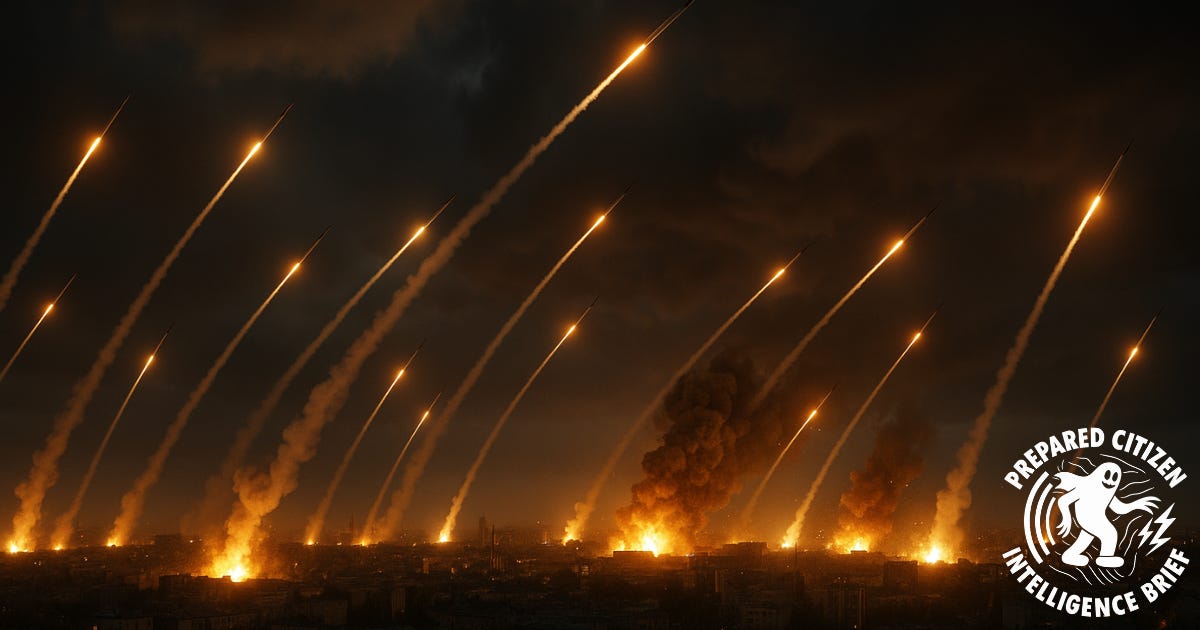
Prepared Brief: Russia launches mass drone & missile attack on Ukraine, Tropical Storm Melissa nears major hurricane strength
October 23, 2025 | 12:00 PM CDT
Analyst Insight
Over the past day, the world saw a major escalation in the Russia‑Ukraine war and mounting weather threats in the Caribbean.
Russia fired 405 drones and 28 missiles overnight at Ukrainian energy infrastructure; Ukraine shot down many, but some missiles struck targets.
At the same time, Tropical Storm Melissa continued to strengthen and is forecast to become a major hurricane with life‑threatening rain in Jamaica, Haiti, the Dominican Republic, and Cuba early next week.
Domestically, Chicago experienced several shootings and an ICE raid that triggered community anger, while a massive cyber‑attack on Jaguar Land Rover illustrated the fragility of industrial supply chains.
Mission workers face heightened danger after an American missionary was kidnapped in Niger.
Overall posture is strained: local violence and protests are simmering, cyber vulnerabilities are exposed, a tropical cyclone threatens resources, and international conflicts are escalating.
Domestic Security & Civil Unrest
Chicago shootings – Two people were killed and a third was wounded in a shooting on South Marshfield Avenue in Chicago’s Auburn Gresham neighborhood. A local pastor noted that the scene looked like a horror film; the victims included a teenager.
Why it matters: continued gun violence could prompt law‑enforcement saturation patrols and community protests, straining city resources.
More Chicago violence – A woman was shot in the face after a verbal altercation with a known male suspect on North Harding Avenue in Humboldt Park; she is in critical condition, and no arrest has been made.
Why it matters: unresolved shootings elevate neighborhood tensions and may provoke retaliatory violence.
Expressway shooting – Illinois State Police closed I‑355 near Lemont after a pickup truck with bullet holes was found; the highway has since reopened.
Why it matters: gunfire on major highways creates travel delays and raises the likelihood of random casualties.
Immigration operation unrest – In Chicago’s Little Village, a driver attempted to ram an ICE vehicle during a federal enforcement operation; he was arrested. At least seven residents, including two members of a city alderman’s staff, were detained, and roads were blocked. Community members accused ICE/CBP agents of constitutional violations and gathered to protest before dispersing peacefully.
Why it matters: such incidents can provoke broader civil rights demonstrations and require additional policing.
Protest in New York – Demonstrators gathered outside 26 Federal Plaza in Manhattan, demanding the release of migrants arrested in ICE raids. Police formed a line to block the entrance while protesters chanted and held signs.
Why it matters: immigration‑related protests are spreading beyond border states and could disrupt federal facilities.
No major active‑shooter incidents or large‑scale protests were reported elsewhere in the past 24 hours…routine caution advised for public events.
Infrastructure & Grid Alerts
Jaguar Land Rover hack – British carmaker JLR resumed production after a six‑week shutdown caused by a cyber‑attack on its parts supplier. The hack cost the U.K. economy an estimated £1.9 billion (US$2.55 billion) and affected over 5,000 organizations. Officials called it the most economically damaging cyber event to hit Britain and warned that losses could rise if parts shortages continue.
Why it matters: the event shows how targeted ransomware can cripple industrial supply chains and lead to prolonged manufacturing delays worldwide.
AWS outage – Amazon’s U.S.‑East‑1 cloud region experienced a major outage on Oct. 21, disrupting thousands of websites and services. Amazon restored service but acknowledged backlog as messages retried; the issue stemmed from a DNS problem in its DynamoDB API.
Why it matters: heavy reliance on a single cloud region poses systemic risk; contingency plans for essential services and communications are critical.
No major U.S. grid or water disruptions were reported in the past day - normal service conditions.
Extreme Weather & Natural Hazards
Tropical Storm Melissa intensifies – Melissa is forecast to reach major hurricane (Category 3) strength early next week as it meanders through the Caribbean. A hurricane watch is in effect for Jamaica and southern Haiti; tropical‑storm warnings extend across those areas. The storm’s slow movement could dump 10 inches or more of rain on Jamaica, the Dominican Republic, Haiti, and Cuba, causing flooding and landslides. Two forecast scenarios exist: Melissa may move west, then turn north near Jamaica/Cayman Islands/Cuba, or intensify sooner and curve north earlier toward the Bahamas. Threat to the U.S. is low but not zero; residents along the Gulf Coast should monitor updates.
Why it matters: heavy rainfall and hurricane‑force winds could disrupt shipping and energy infrastructure and prompt evacuations; early preparation of fuel and supplies is advised.
No other significant storms, wildfires, or earthquakes outside seasonal norms were reported in the continental U.S.
Border & Immigration
Federal enforcement operations – The ICE raid in Chicago’s Little Village resulted in arrests of residents and produced local protests and accusations of rights violations. Road closures highlight the potential for rapid disruption of urban corridors.
Why it matters: future raids could lead to spontaneous protests, curfews, or confrontations; travellers should monitor local advisories.
New York protest – Crowds at 26 Federal Plaza show support for migrants detained during ICE raids, hinting at growing solidarity actions outside the border region.
Why it matters: persistent demonstrations could delay access to government buildings and attract counter‑protests.
No major cartel‑related smuggling interdictions or human trafficking busts were reported in the past day - vigilance remains necessary along the southern border.
Church, Mission & Civilian Safety
Missionary abducted in Niger – An American missionary and pilot for the evangelical agency Serving in Mission was kidnapped by three men in Niger’s capital, Niamey. The abduction occurred as he traveled to the airport; the kidnappers fled toward the western Tillaberi region, a militant‑controlled area. The U.S. State Department confirmed it is aware and is working with local authorities. Kidnappings in the region have risen this year, with previous victims including an Austrian woman and a Swiss citizen.
Why it matters: faith‑based workers in West Africa face elevated kidnapping risk; teams should reassess travel plans, avoid Plateau and Tillaberi regions, and bolster situational awareness.
Belgrade security alert – The U.S. Embassy in Serbia issued a security alert after a shooting and fire near Pionirski Park across from Parliament. The incident caused injuries; authorities say it was localised with no known threat to U.S. citizens, but urged avoidance of the area.
Why it matters: travelers should heed embassy alerts; such incidents can lead to transport shutdowns or protests.
No other attacks on churches or humanitarian workers were reported worldwide.
International Flashpoints
Mass drone and missile attack on Ukraine – Russia launched 405 drones and 28 missiles overnight at Ukrainian energy infrastructure, according to Ukraine’s air force. Ukraine shot down 16 missiles and 333 drones, but other munitions hit targets.
Why it matters: repeated large‑scale barrages may strain Ukraine’s air defenses, affect Europe’s energy supply, and provoke NATO discussions.
Escalating hostilities in Niger – The kidnapping of the American missionary demonstrates the spread of militant activity into Niger’s capital.
Why it matters: further attacks could destabilize the region and threaten humanitarian flights.
No direct threats were reported against U.S. forces or assets; however, tensions are elevated.
Supply Chain & Liberty Watch
Supply Chain: The JLR cyber‑attack demonstrates how hacking can halt vehicle production for weeks and ripple through suppliers. Monitoring for further corporate cyber incidents is prudent. No major port closures, strikes, or fuel shortages were reported today.
Liberty & Policy: No new court rulings affecting Second Amendment rights or other constitutional freedoms were widely reported in the past 24 hours.
Signals to Monitor
Storm track – Monitor National Hurricane Center updates on Melissa. If the storm curves toward Florida or the Gulf, expect fuel shortages and evacuation orders within 72 hours.
Federal raids – Watch for additional ICE or CBP operations in urban immigrant communities; quick online activism may signal larger protests.
Cyber incidents – Increased ransomware chatter following the JLR hack could presage attacks on other manufacturers or utilities.
West Africa security – Reports of additional kidnappings or militant attacks in Niger, Mali, or Burkina Faso could require evacuation of mission teams.
Russia–Ukraine escalation – Another barrage of drones or missiles or retaliation by Ukraine against Russian territory could widen the conflict.
Red Flags
If Melissa reaches Category 4 and models shift toward the U.S. Gulf Coast, activate hurricane plans and secure property.
If protests over ICE operations turn violent or law enforcement institutes curfews, avoid affected neighborhoods and adjust travel routes.
If ransomware spreads to North American automotive suppliers, prepare for vehicle parts shortages and longer repair times.
Should State Department advisories for Niger or neighboring countries elevate to Level 4 – Do Not Travel, mission groups should evacuate immediately.
A significant strike on Ukrainian nuclear or power plants could trigger regional blackouts and geopolitical escalation; monitor energy price spikes.
Preparedness Action Items
Hurricane readiness – Residents in the Caribbean and U.S. Gulf should fill fuel tanks, restock water, food, and medications, and secure loose outdoor items before Saturday. Review evacuation routes and check batteries for flashlights and radios.
Cyber hygiene – Businesses should update anti‑ransomware software, back up critical data offline, and train staff on phishing awareness this week to reduce susceptibility to attacks like the JLR hack.
Urban security – In Chicago and other cities experiencing shootings, avoid late‑night travel in high‑crime zones and stay alert to police advisories. Attend community safety meetings to support violence‑prevention programs.
Mission safety – Faith‑based organizations with personnel in West Africa should perform a security audit, ensure satellite communication devices are operational, and establish check‑in procedures immediately.
General – Keep emergency kits updated, maintain at least half a tank of gas, and have cash on hand in case of power or network outages.