
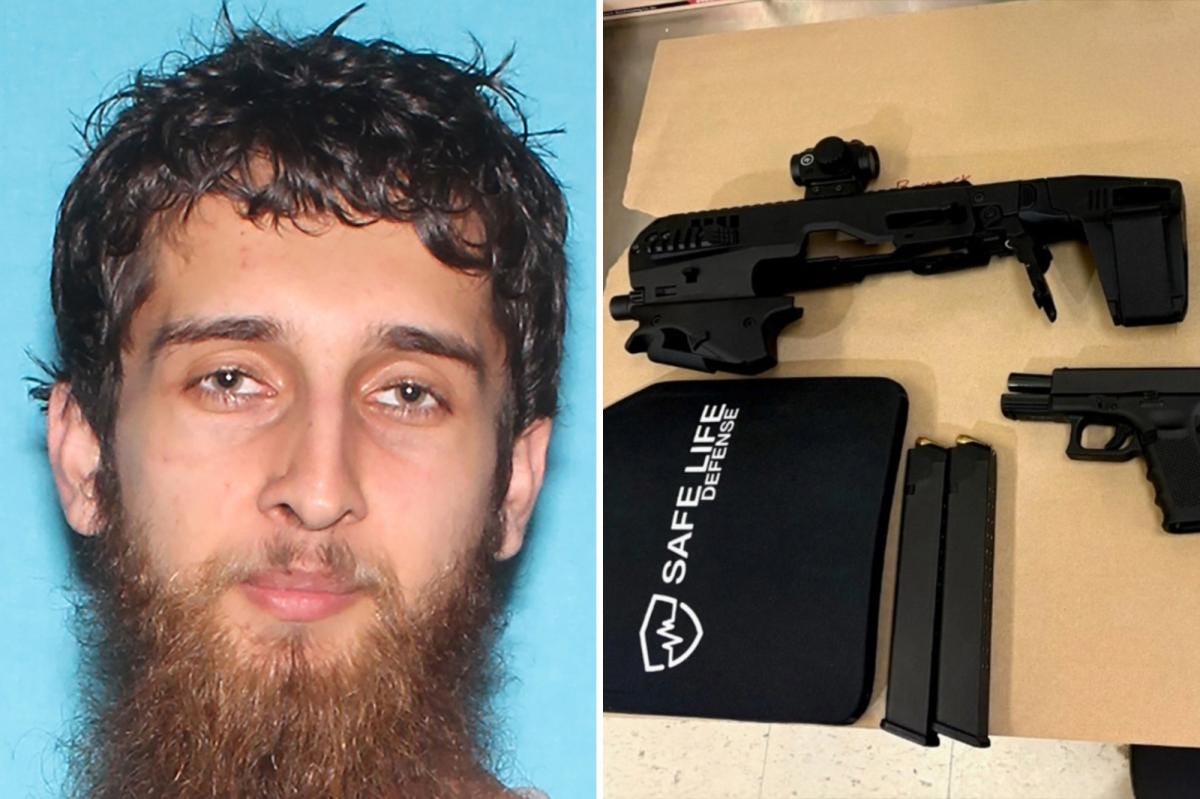
Late on the night of November 24, 2025, a routine patrol decision interrupted what could have become a deadly campus attack.
New Castle County police encountered Luqmaan Khan, a 25-year-old University of Delaware undergraduate, sitting alone in a vehicle inside Canby Park West after the park had closed.
Officers reported that Khan appeared nervous, repeatedly reached inside the vehicle, and refused commands to stop or exit.
When he continued to resist, officers detained him and conducted an inventory search.
Inside the truck, police discovered a Glock handgun modified with an illegal machine gun conversion device, multiple extended magazines, ammunition, and a ballistic armor plate.
They also recovered a marble composition notebook.
That notebook changed how this case should be understood.
The pages were not emotional writing or broad ideological slogans.
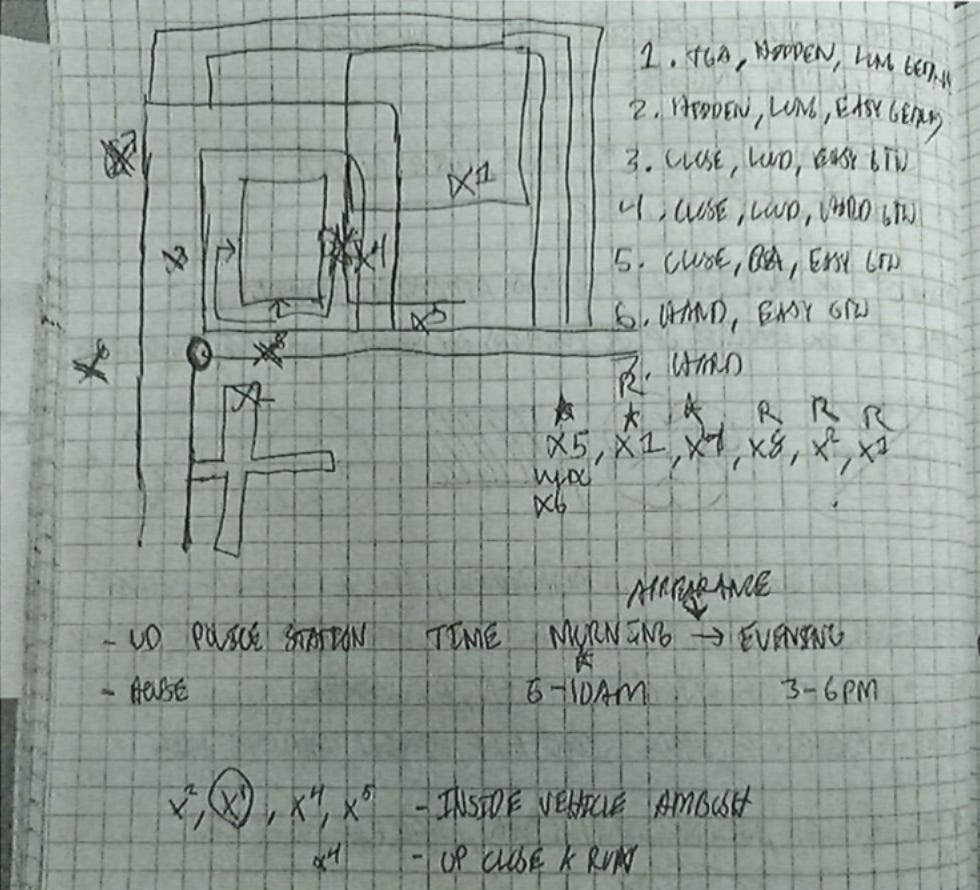
They contained hand-drawn diagrams of the University of Delaware Police Department, annotated entry and exit points, timing windows labeled “morning” and “evening,” and notes describing ambush positions.
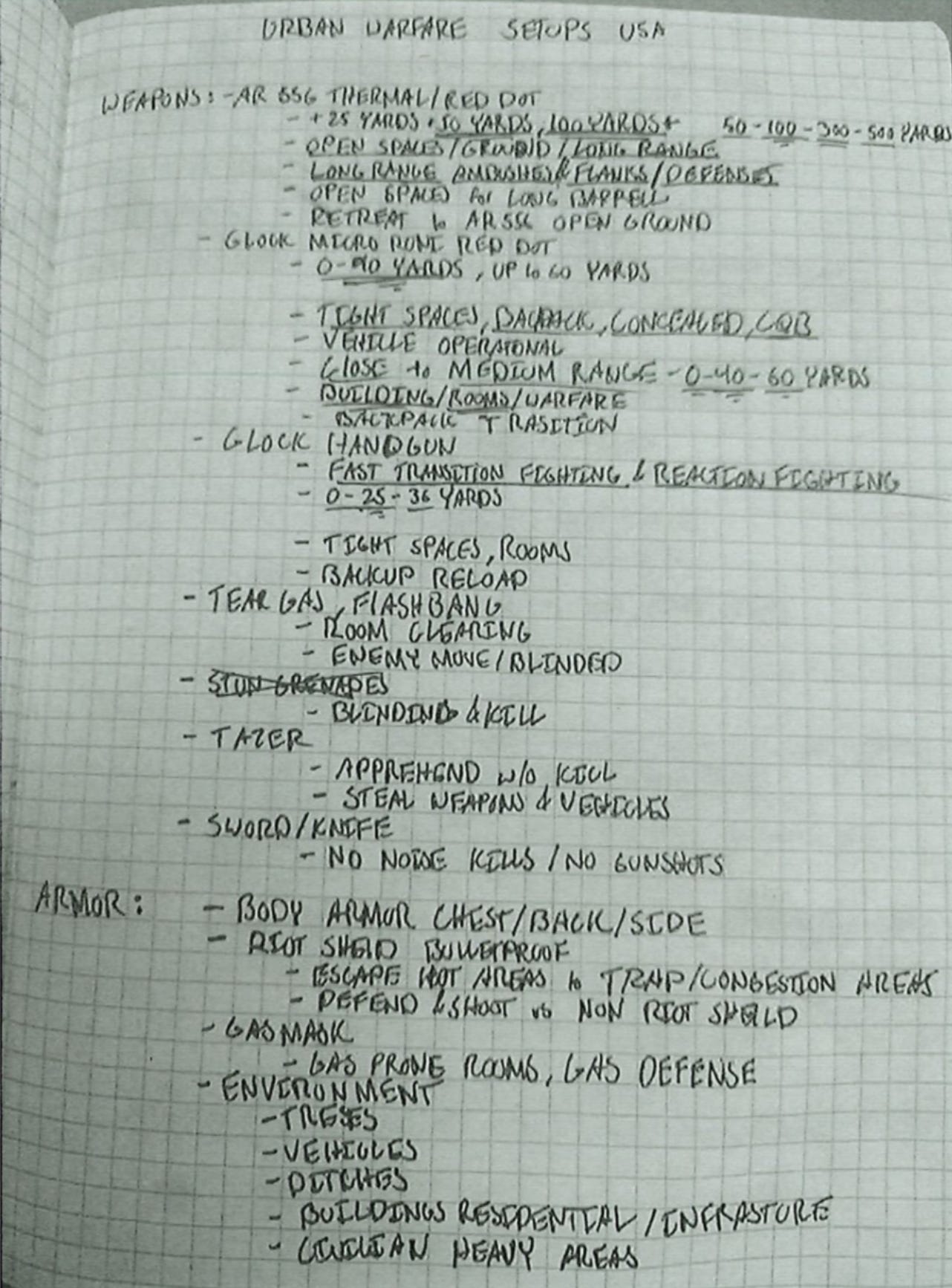
Other pages listed weapons with intended range bands and environments, along with references to room clearing, flashbang use, gas mask employment, and movement through “residential buildings” and “civilian heavy areas.”
A subsequent FBI search of Khan’s residence uncovered a second illegally modified Glock, a .556 rifle with optics, additional extended magazines, hollow-point ammunition, and tactical gear.
Federal prosecutors later confirmed that the notebook referenced how law enforcement detection could be avoided and named a specific university police officer.
Khan now faces federal charges for possession of an unregistered machine gun, along with state firearm offenses. Officials credit patrol officers with preventing violence.
That assessment is correct. But it does not capture how narrow the margin was.
This Was Planning, Not a Manifesto
Public statements have repeatedly labeled Khan’s notebook a “manifesto.” That term misleads.
What was recovered reads far less like ideological justification and far more like a rough operational outline.
It shows attention to timing, terrain, response suppression, and post-contact movement.
It is not sophisticated or professionally formatted, but it reflects deliberate study and rehearsal.
Most significant is how civilians are treated in the planning. Khan’s notes explicitly reference defending or operating within “civilian heavy areas” and “residential buildings.”
In this model, civilians are not incidental…they function as terrain and time.
Their presence is expected to slow the response, create hesitation, and extend the duration of the attack.
They are time barriers that delay response and decision-making.
This planning logic mirrors patterns increasingly seen in overseas attacks and attempted domestic plots.
Neutralize or delay armed responders first, then displace into dense civilian space, where congestion and uncertainty work in the attacker’s favor.
The notebook also repeatedly references martyrdom, framing death not as a risk but as an objective.
This is important because it eliminates deterrence based on survival or escape. The goal is damage, not evasion.
Why This Case Matters Beyond One Campus
There is no publicly available evidence, as of this writing, that Khan was directly tasked or coordinated with a foreign organization.
For some, that reduces the perceived threat.
It should not.
This case illustrates how modern attackers can self-generate operational thinking through open-source material, propaganda, and peer amplification without direct command and control.
That makes detection harder, not easier. The attack does not need to be scheduled, announced, or coordinated…it only needs time.
What stopped this case was not an intelligence intercept or digital monitoring. It was patrol-level awareness and behavioral indicators during a chance encounter.
That is not a scalable defense strategy.
This should concern anyone responsible for safety in environments defined by openness: universities, churches, schools, events, and public gatherings.
Where the Story Changes
The remainder of this analysis is for paid subscribers.
From this point forward, we examine:
Why this planning model represents a growing threat pattern
How “civilian heavy areas” are being deliberately exploited
What we consistently miss before attacks
And what specific preparedness and training measures actually disrupt this kind of violence
