
The Gracie Mansion IED Attack: The Crowd Was Lucky
Next Time They Might Not Be
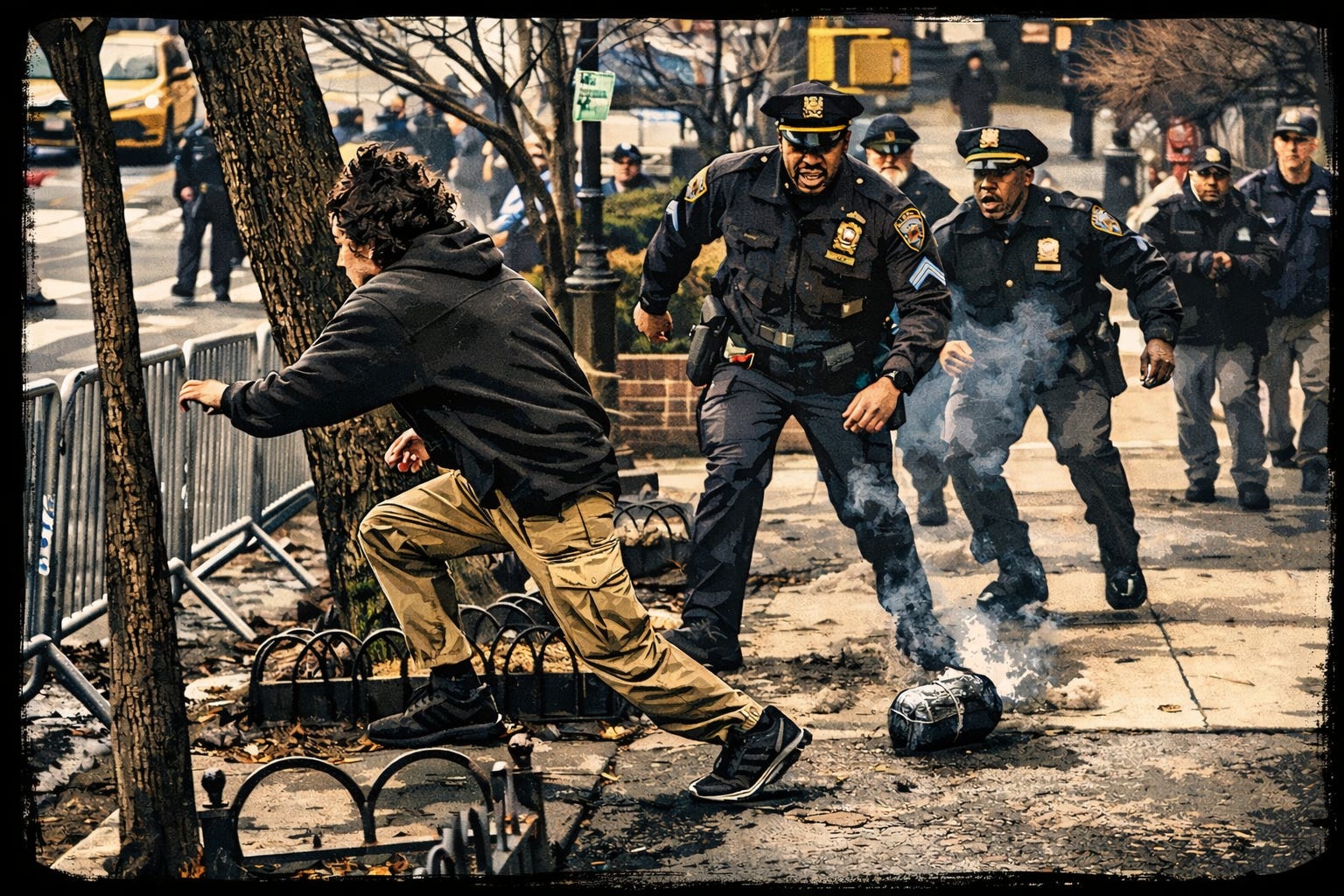
In the heart of Manhattan’s Upper East Side, what started as a tense standoff outside Gracie Mansion on March 7, 2026, nearly turned into a bloodbath.
While legacy media spins it as “suspicious devices” amid “clashing protests,” the reality is stark: Two counterprotesters, inspired by ISIS propaganda, hurled shrapnel-packed IEDs at a group demonstrating against the “Islamification” of New York City.
Shouts of “Allahu Akbar” were reported as the devices, loaded with nuts, bolts, screws, and volatile TATP explosive, were lit and thrown.
By sheer luck, they fizzled out, sparing lives but exposing how quickly urban gatherings can devolve into kill zones when authorities drop the ball.
The facts, pieced from NYPD statements and FBI updates: Emir Balat, 18, lit the first IED and tossed it toward the anti-Islam crowd led by conservative activist Jake Lang.
It struck a barrier at East 87th Street and East End Avenue, landing in the crosswalk with flames and smoke but no full detonation.
Balat then grabbed a second device from accomplice Ibrahim Kayumi (or Nikk), 19, lit it, and dropped it during his escape.
Both Pennsylvania teens were arrested on-site, admitting to ISIS video influence.
A third suspicious device turned up the next day in a linked vehicle blocks away, prompting evacuations and escalating the probe to federal terrorism levels.
No injuries, but NYPD Commissioner Jessica Tisch confirmed the bombs “could have caused serious injury or death.”
This is a symptom of deeper failures.
Mayor Zohran Mamdani, NYC’s first Muslim mayor, condemned the original rally as “bigotry,” but critics argue his administration’s lax stance on extremism invited escalation.
Media outlets like TIME and CNN frame it neutrally as “opposing groups,” burying the terror angle to avoid uncomfortable truths about imported threats.
When the government prioritizes narratives over security, prepared citizens must fill the gap.
The Hidden Threat in Crowds: Why Positioning and Awareness Save Lives
Urban protests create perfect conditions for disaster: Confined spaces, high emotions, barriers channeling people like cattle.
The Gracie Mansion crowd, 50-150 total, was small, but add IEDs, and panic could have triggered a deadly stampede.
We’ve seen it in past events: Barriers become traps, exits clog, and the crowd itself turns lethal.
For prepared citizens, the lesson is clear…don’t rely on police lines or event organizers for safety.
Here’s how to stack the odds:
Scout Early, Position Smart: Arrive ahead to map escape routes. Avoid the center; stick to edges where you can break away fast. In Gracie, the crosswalk throw created instant choke points…had it exploded, those behind barriers would be sitting ducks.
Read the Signals: Watch for red flags like unusual shouts (”Allahu Akbar” is a cue) or suspicious movements. Tensions were brewing with verbal clashes; prepared folks would have noted the escalating taunts and edged out.
Gear Essentials for Volatile Environments: Pack light but effective. A go-bag with water, a multi-tool, flashlight, first-aid (including tourniquets for shrapnel wounds), and a respirator for smoke/chemicals. Concealed carry if legal…defend against direct threats to your life when cops are overwhelmed.
Exit Drills: Practice “bugging out” mentally. If violence erupts, move perpendicular to the flow, use cover like vehicles or trees, and prioritize family/group cohesion. Don’t linger to film…curiosity kills in crowds.
Comms Continuity: Cell jammers or overloads are common in chaos; have backups like radios or offline maps. When signals die (as in past blackouts), you’re on your own.
Government won’t always be there…NYPD acted swiftly here, but in a larger crisis, response times stretch.
Build resilience now: Train with your network, stock essentials, and stay informed beyond headlines.
This brief is free to equip you against rising threats. For exclusive deep dives, gear breakdowns, and real-time intel briefs, upgrade to paid on Substack.