
What the Coverage Missed About the UK's SEVERE Threat Raise
The official line was that the threat being raised was “not solely” because of Golders Green. That phrasing is worth sitting with.
When an intelligence agency publicly raises its threat level to SEVERE and immediately clarifies that a terrorist stabbing of two Jewish men wasn’t the main reason, that tells you something.
It means the picture they’re not fully describing is worse than the one they’re willing to describe.
CRITICAL, the level above it, means one is “expected imminently.” The UK hasn’t been at SEVERE since November 2021. That time, it took two separate attacks to get there.
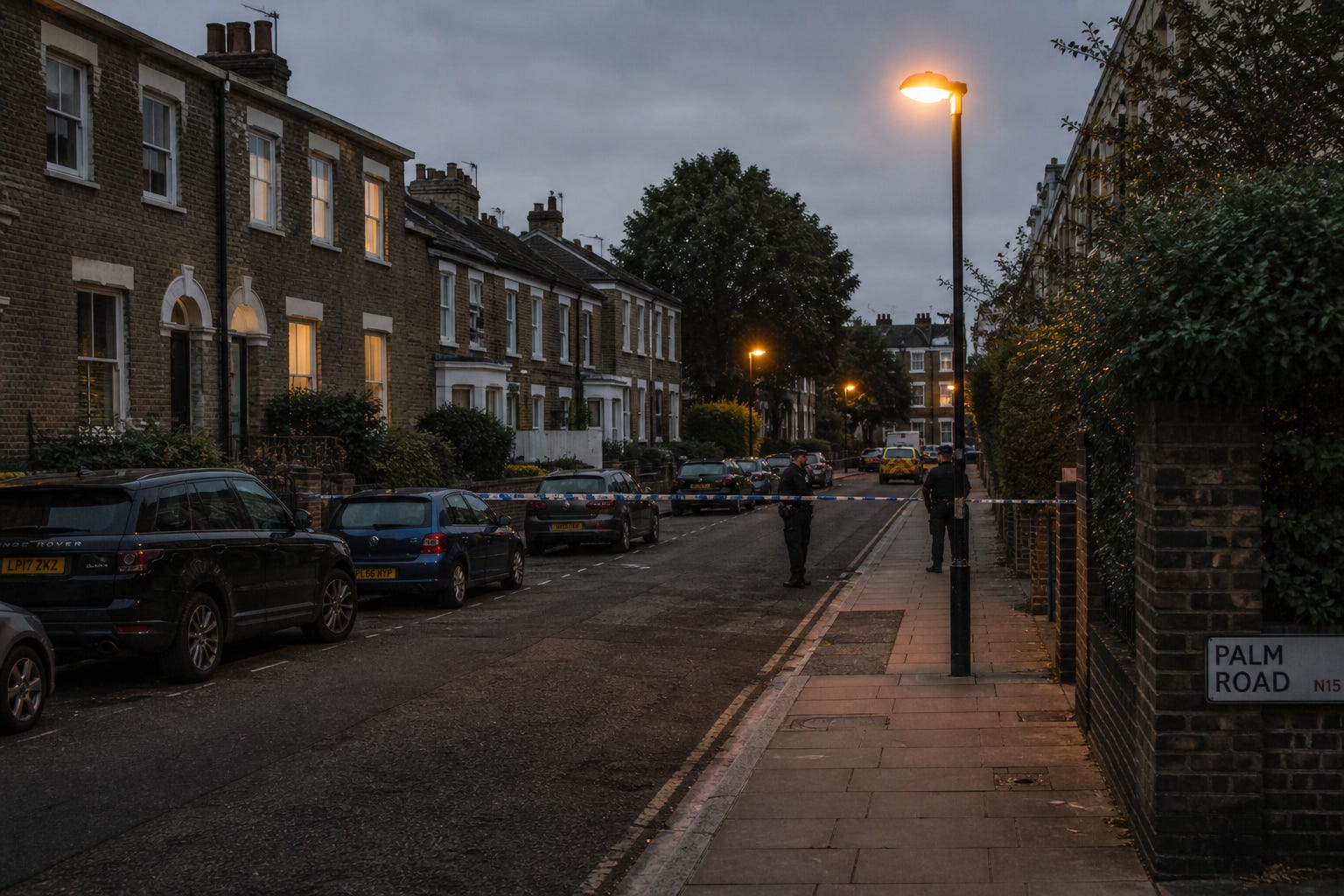
The visible trigger was the Golders Green attack on April 29. Essa Suleiman, a 45-year-old Somali-born British national, stabbed two Jewish men on Highfield Avenue in north London.
Shloime Rand, 34, and Moshe Shine, 76, both suffered serious injuries. Suleiman also attacked a third man earlier that same day.
He was Tasered at the scene, charged with two counts of attempted murder and possession of a bladed article, and remanded in custody. The Metropolitan Police declared it a terrorist incident.
That’s the incident the coverage led with. But JTAC’s language pointed somewhere broader.
Officials cited a “gradual rise in threats over time,” driven by increased volume, breadth, and complexity across multiple ideologies.
That’s counter-terrorism language for: more cases, more planning activity, and different kinds of people doing it.
The specific threat environment includes rising Islamist terrorism (still the primary threat), a documented increase in Extreme Right-Wing Terrorism from individuals and small groups, and an elevated threat to Jewish and Israeli targets tied to the ongoing Middle East conflict.
Three separate threat streams, all trending up simultaneously.
JTAC doesn’t raise to SEVERE because of one incident. They raise to SEVERE because they’ve been watching a threat picture build for months and decided the gap between what’s assessed privately and what’s communicated publicly had become untenable.
The 2021 comparison is the most useful data point, but most coverage ignored.
The last time the UK hit SEVERE was November 2021. It took two separate incidents to get there: the Liverpool Women’s Hospital car bombing on Remembrance Day, and the murder of MP Sir David Amess, stabbed in his constituency surgery.
Two unrelated attacks within weeks of each other, different ideological backgrounds. JTAC raised to SEVERE and dropped back to SUBSTANTIAL in February 2022, roughly three months later.
The difference now: officials are not framing this as a reaction to a specific attack. They’re describing a sustained build.
The Golders Green attack gave them a public reference point, but the intelligence basis for the raise was already there.
That distinction matters. In 2021, the raise was responsive. Two attacks happened, the threat level reflected the post-incident environment.
In 2026, the raise is anticipatory.
The cases, planning activity, and radicalization pipeline had already justified a higher designation before the attack occurred. The attack gave JTAC a moment to communicate it publicly, but didn’t create the justification.
Anticipatory raises are harder to walk back. JTAC doesn’t lower the level until the intelligence picture clears.
The factors they cited, volume, breadth, complexity, multiple ideologies, don’t resolve quickly.
The targeting pattern is the other element mainstream coverage is underweighting.
Three of the threat streams JTAC identified are converging on the same target set: Jewish and Israeli individuals and institutions.
Islamist-motivated actors, ERWT actors, and state-linked threat activity are all producing elevated threat to Jewish communities, though for different reasons.
Islamist actors tied to Gaza-related radicalization. ERWT actors operating on longstanding antisemitic ideology. State-linked activity tied to Iranian intelligence targeting Israeli diaspora.
Golders Green was one of London’s most visibly Jewish neighborhoods. The arsons on Jewish-linked premises that preceded the stabbing were part of the same targeting pattern, multiple prior arrests, and a sustained campaign against Jewish institutions that has been escalating toward direct violence.
For anyone operating near these communities, that concentration of threat from multiple unrelated threat actors on the same physical spaces is an operational risk factor that doesn’t appear in generic threat level guidance.
The official “be alert but not alarmed” messaging is designed for the general public. It’s not designed for people trying to make actual risk decisions.
What to Do
If you’re traveling to the UK in the next 60 to 90 days, raise your baseline awareness posture, not your alarm level. SEVERE changes the probability calculus of a bad event, not the behavior you’d use to respond to one. Know your exits. Reduce time in transitional spaces. Pay attention to anything drawing police attention before deciding whether to stay or move.
If you work with or support Jewish community organizations, institutions, or events, treat the UK targeting pattern as a leading indicator. The same converging threat streams, Islamist radicalization, ERWT, and state-linked intelligence activity, are active in multiple Western countries. UK threat levels often surface formally a few months before the same patterns show up elsewhere.
Pay attention to soft targets adjacent to Jewish and Israeli-linked venues. The pattern in the UK has been primary targets absorbing security upgrades while the attacks happen on the streets around them. Highfield Avenue is a residential street, not a secured facility. The hardening of the obvious target pushes the violence one step outward.
Separate the SEVERE designation from the Golders Green media cycle. The news coverage will move on. The JTAC assessment is based on an intelligence picture that hasn’t changed. Check MI5.gov.uk for updates, not news headlines.
If you’re building or advising security programs for Jewish community organizations in the US, this threat environment is a documented, official, sourced reference point for current risk conversations with leadership. The UK data is real and applicable to that conversation right now.
The Edge
The Golders Green reporting largely skipped over one detail: Suleiman attacked a third man earlier the same day, at a different location. That matters.
He was already in an active threat state before the primary attack. His violence didn’t suddenly escalate from zero…it had already started.
The pre-attack indicators existed but played out on a different victim, in a different location, before law enforcement could connect the sequence.
That’s a pattern with implications beyond this specific case.
When a threat actor is already in motion, the first event in the sequence often doesn’t present as terrorism. It looks like a street assault.
The information processing gap between “street crime” and “active terrorist” is real, and it costs response time.
If you’re in a high-threat environment and you hear about a nearby assault before any larger incident, that’s a data point, not background noise.